

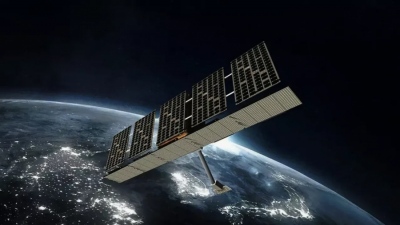
The arena of confrontation between Russia and the West no longer appears confined to the trenches of Ukraine. It shifts hundreds of kilometers above Earth, where military and reconnaissance satellites acquire ever greater importance for the outcome of modern conflicts. At the center stands the Russian military satellite Cosmos-2612, whose movements, according to Western media reports, have caused severe concern in Europe. The reason? Its alleged close approach to the European satellite ICEYE-X36, which belongs to a satellite monitoring network utilized, among other things, to support Ukrainian military operations.
From 320 kilometers to a mere five — The maneuver that sounded the alarm
According to reports, Cosmos-2612, launched in April 2026, executed a series of orbital maneuvers in late September, altering its trajectory and drastically reducing its distance from ICEYE-X36. While previously positioned roughly 320 kilometers away, it reportedly reached a distance of just five kilometers from the European satellite. Such a close approach, if confirmed, can hardly pass unnoticed in an environment where every orbital change is monitored with intense attention. Western analysts characterize the move as a "deliberate approach," assessing that it could be linked to an attempt at tracking, intelligence gathering, or even potential disruption of the European satellite's operational capabilities. However, thus far, these reports do not prove that any aggressive action or electronic jamming took place.
The Russian "hunter" reportedly tracking the European satellite
Even greater interest surrounds the claim that evasion maneuvers by ICEYE-X36 failed to yield the desired outcome. According to the publication, the Russian satellite continued following the European vessel's orbit, creating the image of persistent tracking. Additional Russian military satellites from the Cosmos series are also reported active within the same vicinity. If this information corresponds to reality, Moscow demonstrates that it possesses the capability to approach critical Western space infrastructure and offer a reminder of how vulnerable systems supporting modern military operations can be. The emerging question is exceptionally serious: does this constitute a demonstration of technological capabilities, an intelligence gathering mission, or an indirect message to European countries bolstering Ukraine militarily?
ICEYE: The European "eye" seeing through clouds
ICEYE-X36 is no ordinary observation satellite. It belongs to the satellite constellation of the Finnish company ICEYE, which develops synthetic aperture radar (SAR) imaging systems. This specific technology enables Earth surface observation day and night, even under dense cloud cover conditions. These capabilities hold particular military value, as they can contribute to detecting troop movements, monitoring installations, and formulating a picture of operational battlefield developments. Ukraine has leveraged ICEYE satellite data since 2022, a fact rendering such space infrastructure a significant factor in the conflict with Russia.
The next front has no borders — And it sits right above our heads
The Cosmos-2612 affair highlights a reality that frequently remains in the shadow of daily military announcements. Modern warfare is not conducted solely via missiles, battle tanks, and unmanned aerial vehicles; it is conducted via data, satellite imagery, electronic systems, and capabilities of space domain control. The potential loss or disruption of a reconnaissance satellite can impact the flow of information to military forces without a single shot fired on the ground. Precisely here lies the greatest anxiety. When military satellites belonging to different sides approach at such close distances, the risks of miscalculations, accidents, and further escalation multiply.
Moscow's message and the major question for Europe
If confirmed that Cosmos-2612's movements were deliberate and linked to ICEYE-X36's mission, the case will acquire weighty geopolitical significance. Russia will have demonstrated that it can exert pressure not only along traditional military fronts, but also against critical technological infrastructure supporting Ukraine. On the other hand, Europe is called upon to answer a difficult question: how well protected are its satellite systems against maneuvers of this nature? Because if the war in Ukraine has already proven that information constitutes a weapon, the Cosmos-2612 case serves as an even more alarming reminder: that even the "eyes" observing the war can transform into targets. And then, the next major crisis between Russia and the West might not originate on land, at sea, or in the air—it may begin within the silence of space.
www.bankingnews.gr






Σχόλια αναγνωστών